


Understand partial hospitalization program
A partial hospitalization program, often referred to as a partial hospitalization program for addiction or PHP addiction treatment program, offers intensive support while you maintain residence at home or in a sober living environment. You typically attend five to seven days per week, with each session lasting four to six hours, yielding approximately 20–30 hours of care weekly [1]. Most programs run two to four weeks on average [2].
At this level of care, you benefit from:
- Daily clinical oversight: A multidisciplinary team—psychiatrists, nurses, therapists—monitors progress and addresses medical or psychiatric needs immediately [2].
- Structured schedule: You follow a day-long agenda of individual therapy, group sessions, family therapy, and medication management.
- Comprehensive care: Evidence-based modalities such as cognitive behavioral therapy (CBT), dialectical behavior therapy (DBT), motivational interviewing, and family therapy components form the core of treatment [2].
- Dual diagnosis and co-occurring support: PHPs are especially effective if you face both substance use and mental health conditions, providing trauma-informed and integrated treatment for lasting recovery.
By offering a supportive environment and close supervision, PHPs bridge the gap between inpatient care and outpatient services, stabilizing your condition while you begin building long-term coping skills.
Understand intensive outpatient program
An intensive outpatient program, also known as an iop treatment program or intensive outpatient program, delivers structured therapy without requiring full-time attendance. You generally attend three to five days weekly for two to four hours per session, totaling nine to twenty hours of care each week [2]. Most IOPs span eight to twelve weeks, though some participants extend treatment based on individual needs [2].
Key features include:
- Flexible scheduling: Sessions often occur before or after work and school, allowing you to apply new coping strategies in real time [2].
- Regular clinical supervision: While medical oversight is less frequent than in PHP, therapists and counselors provide ongoing guidance and monitor your progress.
- Evidence-based therapies: You’ll engage in CBT, DBT, motivational interviewing, psychoeducation, and family therapy—tailored to your trauma-informed needs and dual diagnosis considerations.
- Peer support: Group sessions foster camaraderie, accountability, and the sharing of lived experiences in a supportive environment.
IOPs suit individuals with a reliable home support system or those balancing work, school, and family responsibilities while pursuing recovery.
Compare program intensity and oversight
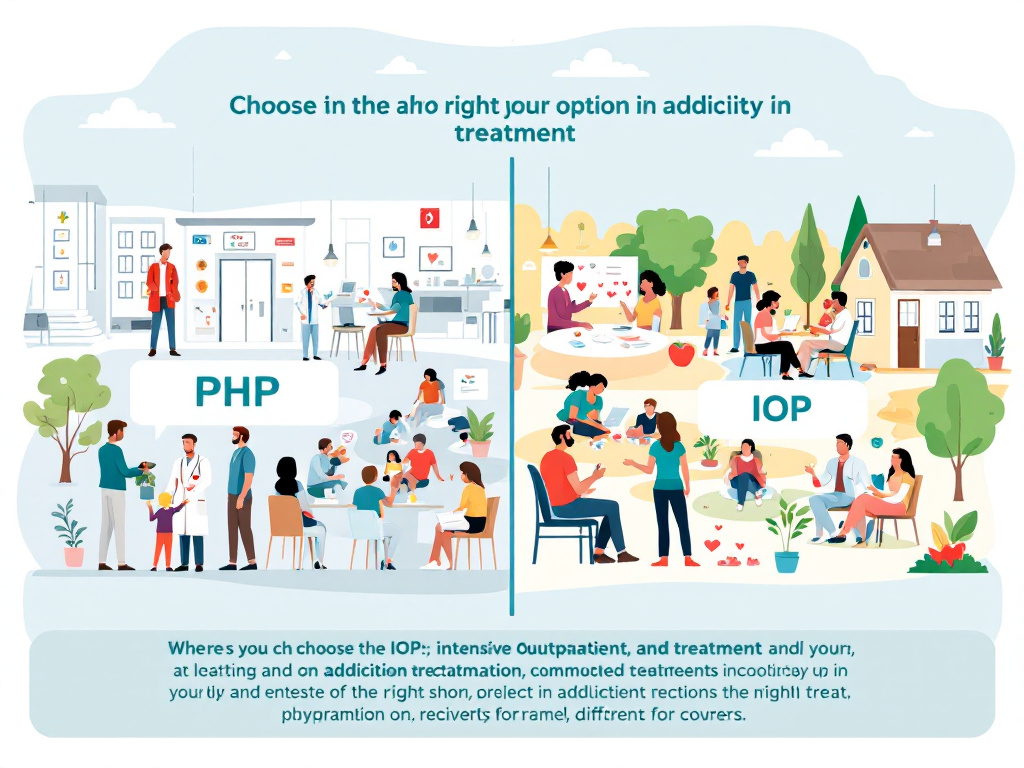
Understanding the differences between PHP and IOP can help you choose the right fit. The following table highlights key contrasts:
| Feature | PHP | IOP |
|---|---|---|
| Attendance | 5–7 days per week | 3–5 days per week |
| Daily hours | 4–6 hours | 2–4 hours |
| Weekly treatment hours | 20–30 | 9–20 |
| Typical duration | 2–4 weeks | 8–12 weeks |
| Medical oversight | High, daily access to psychiatrists/nurses | Moderate, scheduled clinical check-ins |
| Treatment modalities | Individual, group, family, medication management | Individual, group, psychoeducation |
| Home environment | Home or sober living | Home, work, school |
| Cost | Higher, due to intensive staffing | Lower, due to reduced on-site needs |
Evaluate duration and schedule
When weighing PHP vs IOP addiction treatment, consider how each program aligns with your life commitments:
- PHP duration: Shorter term but full-day attendance may disrupt work, school, or family responsibilities.
- IOP duration: Extended timeline offers gradual reintegration into daily life while sustaining structured care.
- Scheduling flexibility: IOP’s part-day model supports employment and caregiving, whereas PHP demands more time but delivers rapid stabilization.
Evaluating how each schedule fits into your routine helps you maintain essential responsibilities without compromising recovery.
Assess modalities and therapies
Both PHP and IOP leverage evidence-based approaches designed to address the physical, psychological, and social dimensions of addiction. Core modalities include:
- Cognitive behavioral therapy (CBT)
- Dialectical behavior therapy (DBT)
- Motivational interviewing
- Family therapy
- Relapse prevention planning
Additionally, many programs integrate:
- Trauma-informed care to address past emotional wounds
- Dual diagnosis treatment for co-occurring disorders [3]
- Holistic therapies such as yoga, meditation, and art therapy to promote overall wellness
By tailoring your treatment plan with a mix of these therapies, you build the coping strategies and self-awareness necessary for lasting recovery.
Consider cost and coverage
Cost can influence your decision between a PHP and an IOP. Key considerations include:
- Program fees: Partial hospitalization typically incurs higher costs due to daily staffing and medical supervision [1].
- Insurance coverage: Most commercial insurance plans and Medicaid cover outpatient levels of care—including PHP and IOP—when deemed medically necessary [4].
- Out-of-pocket expenses: Verify deductibles, copays, and any limits on session hours or program length with your provider and insurer.
By clarifying financial obligations upfront, you can focus on treatment without unexpected surprises.
Identify patient fit and readiness
Choosing between PHP and IOP depends on your clinical needs, home support, and readiness for independent management:
-
PHP may suit you if:
-
You have severe withdrawal risk or co-occurring mental health disorders
-
You lack reliable support at home
-
You require daily medical oversight
-
IOP may suit you if:
-
You have moderate addiction severity and a stable home environment
-
You need flexibility to maintain work or school
-
You demonstrate motivation and independence in following treatment plans
Ask yourself:
- How intense are my withdrawal symptoms or psychiatric needs?
- Do I have a supportive, substance-free home environment?
- Can I commit to full-day treatment or do I need part-day flexibility?
Your answers will guide you toward the most effective level of care.
Explore integrated continuum approach
For many individuals, the most effective path to recovery spans multiple levels of care. At Phoenix Recovery Center, you benefit from a full continuum of care addiction treatment model that includes:
- Detox and residential treatment program or residential drug rehab center
- Inpatient addiction treatment program for acute stabilization
- Partial hospitalization or PHP addiction treatment program
- Intensive outpatient or iop therapy for addiction
- General outpatient addiction treatment program and ongoing aftercare
This integrated approach ensures seamless transitions between levels, a trauma-informed environment, and dual diagnosis support. By combining individualized plans with evidence-based therapies, Phoenix Recovery Center emphasizes long-term outcomes such as improved social functioning, reduced substance use, and sustainable wellness.
Plan your next steps
Once you understand the distinctions between PHP vs IOP addiction treatment, take the following actions:
- Consult with a clinical intake specialist to assess your needs.
- Verify insurance coverage and explore financial assistance options.
- Tour facilities and speak with current participants about their experiences.
- Inquire about accreditation, staff qualifications, and integrated therapies.
- Ask how aftercare and relapse prevention treatment center support are structured.
By taking these steps, you empower yourself to make an informed decision that aligns with your goals for recovery. When you’re ready, reach out to Phoenix Recovery Center for a personalized consultation and begin your journey toward lasting health and wellbeing.